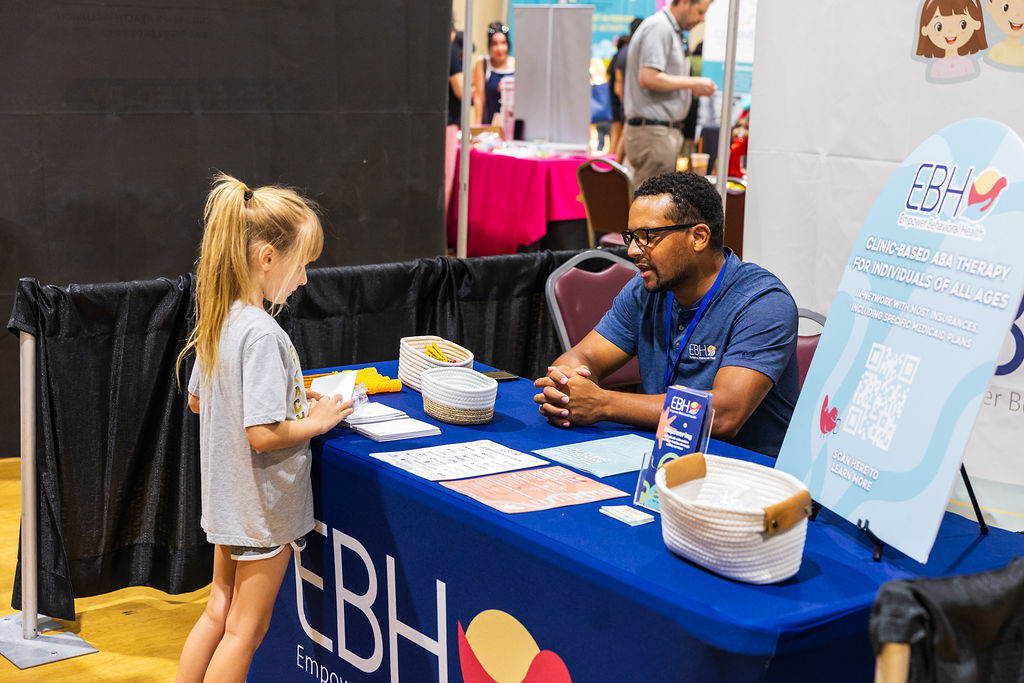
Free screenings at CHILL ACT
🩺 Free developmental screening

A caring first look — no insurance, no cost, no pressure.

Supportive first step · not a diagnosis

Book your child's free screening

The largest free autism & developmental screening program at any US family expo — licensed screeners, private 30-minute appointments. Pick your city, your focus area, and a time that works.

Step 1 of 5 · Where & what20%

Where & what

Every question helps the screener prepare. All questions with * are required.

Pick the closest fit — our team will refine at the screening.

Communication · SpeechTalking, words, listening
Social InteractionFriends, play, eye contact
Behavior & RoutineABA support
Sensory ProcessingSound, touch, movement
Daily Living · MotorOT · fine & gross motor
Learning & FocusReading, attention, school
Emotional RegulationBig feelings, calming
Physical DevelopmentPT · running, balance, play
Feeding & MealtimeTextures, variety, chewing
General · Not sureWe'll figure it out together

Pick your appointment time

30-minute private appointments during the expo.

🕐
Each screening is a private, 30-minute session with a licensed screener — just pick the time that works best for your family. 💛

Your details

Tell us about yourself so we can prepare for the screening.

About your child

This goes only to the screening team.

Review & book

One last look — then your slot is saved.

Please answer the highlighted questions.

Your screening is booked!

Confirmation & reminders are on their way by email and text.

Your appointment
What to expect: arrive ~10 minutes early at the screening area · your session is private and lasts 30 minutes · bring anything that keeps your child comfortable · this is a supportive first step, not a diagnosis — you'll leave with clear, kind next steps.
Also register your family — it's free → ← Back to homepage
🔬 The science

The science behind autism & early screening

Understanding the data behind ASD helps families and communities take informed action. Here's what research tells us about prevalence, the brain, and the life-changing impact of early intervention.

1 in 36
Children in the US diagnosed with ASD
CDC · 2023
More likely to affect boys than girls
CDC ADDM Network
~50%
Better outcomes with early intervention before age 5
JAMA Pediatrics · 2022
5 yrs
Average age at diagnosis — but signs appear much earlier
Autism Speaks · 2023
📈 Prevalence over time

Rising ASD prevalence in the US

Children diagnosed per 1,000 — growing awareness and better screening tools drive the rise. The question isn't whether ASD is common. It's whether families get help in time.

6.7
9.0
14.7
18.5
22.7
27.8
20001 in 150
20061 in 110
20101 in 68
20161 in 54
20201 in 44
20231 in 36
Between 2000 and 2023, the diagnosis rate more than quadrupled. Source: CDC ADDM Network · biennial report
💬 What to look for

Common signs & symptoms

Signs can appear as early as 12–18 months. Every child is different, but these are common early indicators worth discussing with a specialist.

💬 Social & communication

  • Limited or no eye contact
  • Delayed speech or language skills
  • Doesn't respond to their name by 12 months
  • Difficulty understanding others' feelings
  • Prefers to play alone
  • Repeats words or phrases (echolalia)
  • Doesn't point to show interest

🔄 Behavior & routines

  • Insists on sameness or strict routines
  • Repetitive movements (rocking, hand-flapping)
  • Intense focus on specific topics or objects
  • Very upset by minor changes
  • Lines up toys or objects repeatedly
  • Unusual play patterns (spinning wheels)
  • Restricted or limited interests

🌟 Sensory & physical

  • Over/under sensitive to sound, light, texture
  • Unusual reactions to pain or temperature
  • Covers ears in response to sounds
  • Avoids or seeks certain sensory input
  • Difficulty with balance & coordination
  • Unusual eating habits or food sensitivities
  • Fascination with lights, movement, patterns
⚠️ Important: showing one or more of these signs does not necessarily mean a child has autism. Only a qualified professional can provide an accurate assessment — that's exactly what CHILL ACT's free screening is for.
⏱ The earlier, the better

When should you get screened?

There's no wrong time — but there is a best time. Early screening gives children access to the support that shapes the rest of their development.

12–18 mo
First signs may appear
Limited eye contact, not babbling, or not responding to their name may first become noticeable.
2 years
Earliest reliable diagnosis
ASD can be reliably diagnosed by age 2 by experienced professionals using standardized tools.
3–5 years
Critical intervention window
A critical period for brain development — therapy here has the greatest positive impact.
Any age
It's never too late
Older children, teens, and adults benefit from screening and support at any stage of life.
🧠 The window of opportunity

Why early intervention changes everything

Brain plasticity is highest in early childhood — the earlier therapy begins, the greater the impact on development.

0–2 yrs
🔑 Critical window
Brain plasticity at its peak.
2–3 yrs
⭐ Best outcomes
Intervention is most effective.
3–5 yrs
✅ High impact
Significant developmental gains.
5–10 yrs
📘 Beneficial
Especially for social skills.
10+ yrs
💙 Ongoing
It's never too late to seek help.
🌱 Research-backed outcomes

The proven impact of early intervention

When autism is identified and treated early, the outcomes are measurable — for children and families alike.

47%
🗣️ Greater improvement in language with early ABA vs. starting later
Research review
🧩 More likely to attend a mainstream school setting
Early-intervention studies
60%
❤️ Reduction in family stress with early diagnosis & support
Family outcome studies
🔮 What is ASD

Understanding autism spectrum disorder

ASD is a neurodevelopmental condition that affects how a person communicates, interacts, and experiences the world. It's a "spectrum" because it presents differently in every individual — ASD is a difference in how the brain is wired, not a disease. With the right support and early intervention, children with autism can thrive.

🗨️

Social communication

Differences in verbal & non-verbal communication, social cues and relationships.

🔁

Repetitive behaviors

Routines, patterns, and repetitive movements or speech.

🎛️

Sensory differences

Over- or under-sensitivity to sound, light, touch, taste or smell.

Unique strengths

Deep focus, exceptional memory, creative thinking and attention to detail.

🧠 Neuroscience

How ASD affects brain development

Neuroimaging shows that autistic brains develop differently — especially in areas for social cognition, sensory processing, and communication. These differences are present from early infancy.

🔗

Atypical neural connectivity

Over-connectivity in local circuits and reduced long-range connectivity affect how regions communicate.

Sensory processing differences

Altered activity in the amygdala and sensory cortices explains sensory over- or under-sensitivity.

🧬

Strong genetic component

ASD has one of the highest heritability rates — over 80% in twin studies (Nature Genetics, 2019).

🌱

Brain plasticity & intervention

Early behavioral intervention can reshape neural pathways — which is why timing matters so much.

🔗 Patterns

Gender ratio & co-occurring conditions

ASD rarely occurs in isolation. Recognizing co-occurring conditions leads to more comprehensive support.

4 : 1
boys : girls diagnosed
● Boys 80%● Girls 20%

Girls are often diagnosed later due to better social masking (camouflaging) — which is why screening matters for every child.

Common co-occurring conditions
Sensory processing
~90%
Sleep problems
~80%
ADHD
~50%
GI issues
~45%
Anxiety disorder
~40%
Intellectual disability
~33%
🎯 The process

How it works

From registration to meeting your specialist — four steps, zero cost, zero pressure.

1

Register online

Choose your city and pick a screening time that works for your family.

2

Get confirmation

You'll get your appointment details, what to expect, and how to prepare.

3

Attend CHILL ACT

Come to your local expo and check in at the screening area at your time.

4

Meet your specialist

A certified professional runs a private 30-minute screening and guides your next steps.

A free screening is the first step

Supportive, private, and never a diagnosis — just clear, kind next steps for your child.

Book your free screening ↑